
You’ve been thinking about how to make more profit in your business for months now. Maybe years. You’ve consumed every course, downloaded every freebie, followed every guru promising the secret formula. But somehow, your bank account remains stubbornly unchanged while your exhaustion levels skyrocket.
The brutal truth? Your profit problem isn’t a strategy problem. It’s a self-problem.
The Corporate Hangover That’s Costing You Thousands
You’ve been thinking about how to get out of your corporate life since the moment you realized that climbing the ladder meant sacrificing everything that made you, you. So you took the leap. You started the business. You created the offer.
And then you brought every single toxic corporate habit with you.
You’re still performing. Still proving. Still waiting for someone to approve your decisions before you make them. Still measuring your worth by how busy you look instead of how much money you’re actually making.
This is why your business feels like an unpaid internship with yourself as the demanding boss.
When I see female entrepreneurs struggling with how to make more profit in your business, I notice the same pattern: they’re operating like employees in their own companies. They’re asking for permission that nobody’s going to give them. They’re second-guessing every decision. They’re working twice as hard for half the results because they’re terrified of being “too much.”
Too expensive. Too visible. Too confident. Too successful.
Sound familiar?
The Profitability Myth That’s Keeping You Broke
You think profitability comes from better marketing. A prettier website. More followers. The perfect launch strategy.
Wrong.
Profitability comes from making decisions that honor your worth instead of decisions that make other people comfortable.
Every time you undercharge because you’re afraid of losing the client, you’re choosing comfort over profit. Every time you add “one more thing” to your offer because you want to over-deliver, you’re choosing approval over profit. Every time you work with someone who drains your energy because you “need the money,” you’re choosing scarcity over profit.
Your pricing isn’t a math problem. It’s a mirror. It reflects exactly how much you believe you deserve to be compensated for the transformation you provide.
If you’re serious about learning how to make more profit in your business, you need to stop asking “Is this too much?” and start asking “Is this enough for the value I’m creating?”
Why The Low-Ticket Strategy Keeps You Stuck at $500/Month?
My client Sarah was doing everything “right.”
She had a $47 digital product. A complete system for booking clients on Instagram. Beautiful branding. Perfectly formatted. She spent 20 hours creating it.
She created content to promote it. Carousels breaking down her framework. Reels with hooks she studied from other successful creators. She’d post three times a day.
Some posts would go viral. 5K views. 10K views. Her follower count grew from 600 to 2,100 in two months.
But her sales? Maybe three per month. Sometimes five if she really pushed during a launch.
$141-$235 per month. After spending 40+ hours creating content and engaging.
The problem wasn’t her offer. The problem was her content strategy was preventing sales.
She’d create a carousel: “5 Steps to Book Clients on Instagram”
Then she’d proceed to explain all five steps. In detail. The exact DM script. The follow-up sequence. The objection handling framework.
People would save it. Comment “This is gold!” Share it to their stories.
But why would they buy her $47 product when she just gave them the entire system for free?
She’d tell herself: “I’m building trust. I’m showing my value. Eventually they’ll buy.”
They didn’t.
Because the people who want everything for free are not the people who buy. They’re candle-sniffers. They love the smell of transformation but have zero intention of paying for the candle.
Sarah was creating content for people who would never become customers. And the more viral she went, the more of these people she attracted.
The Hidden Cost of Chasing Viral Content
When you focus on going viral to make money online with social media, you’re playing a numbers game that doesn’t work at the small audience level.
Think about it. If your email list is 200 people and your conversion rate is 1-5%, you’re looking at 2-10 sales. If you’re selling a $27 product, that’s $54-$270 per launch.
So the advice becomes: “Grow your email list! Get more followers! Go viral!”
But growing your list means creating more content. Which means more hours spent on social media. Which means more exhaustion for the same $500/month result.
And the type of content that goes viral? It’s broad. Relatable. Safe. It appeals to everyone.
But buyers don’t want broad. Buyers want specific. They want content that activates them, not content that makes them feel good.
This is how to create content that converts: stop trying to appeal to everyone. Start speaking directly to the person who’s ready to invest.
My client Jennifer learned this the hard way.
She spent six months trying to replicate the viral strategies she saw other coaches using. She’d study their hooks. Copy their formats. Post reels with trending audio.
And it worked, for getti ng views. She’d hit 5K, sometimes 8K views per reel. Her followers grew from 800 to 2,400.
But her revenue stayed at €500 per month.
Her DMs were full. But full of the wrong people.
People asking for free advice. People wanting to “pick her brain.” People saying they were “so close to buying” but needed just a few more questions answered first.
She’d spend two to three hours every day in these DM conversations. Terrified of losing the sale. Writing paragraph after paragraph. Essentially giving away her entire coaching program for free, one message at a time.
Spoiler: if you need to convince someone to buy from you, you’ve already lost the sale.
Jennifer was working 12-hour days. Creating content. Engaging in DMs. Perfecting her hooks. Analyzing her insights.
For €500 a month.
That’s €4.16 per hour.
The Shift That Changed Everything
Jennifer’s transformation started when she stopped focusing on virality and started focusing on ROI.
She added a high-ticket offer. A three-month coaching package for €1,200.
“But nobody will buy that,” she said. “I barely have 2,000 followers.”
I told her: “You don’t need 2,000 people to buy it. You need two.”
She changed how she created content. Instead of trying to go viral with broad, relatable hooks, she created content that activated her ideal client.
Content that said: “You’re spending three hours a day in DMs with people who will never buy from you. I know because I did it for 18 months. The uncomfortable truth? If someone needs that much convincing, they’re not your client. Your actual clients see your offer and think ‘finally, someone gets it.’”
That post got 400 views. Half of what her viral reels got.
But she booked two sales calls within 48 hours. Both converted. Both at €1,200.
That single piece of content made her more than three months of viral reels combined.
In six weeks, Jennifer went from €500/month to €3K/month. Same audience size. Different strategy.
She stopped creating content for the algorithm. She started creating content for buyers.
Why High-Ticket Makes More Sense for Small Audiences?
When you have a small audience and you want to know how to create content that converts, you need to understand this:
Your visibility is still growing. Your conversion skills need to grow faster.
If you’re selling low-ticket, you’re dependent on volume. You need hundreds of people to see your offer to make decent money.
But if you’re selling high-ticket? You need ten people. Five people. Sometimes just two people to have a $5K month.
And working with clients one-to-one? That teaches you things no amount of viral content ever will.
You learn:
What their actual problems are (not what you think they are)
What language they use to describe their pain
What objections come up
What transformations they really want
What made them say yes to investing
This intel is gold. Because now you can create content that speaks directly to those pain points. Content that addresses those objections. Content that promises those specific transformations.
You stop guessing. You start knowing.
Sarah made the shift too. She kept her $47 product but added a $997 intensive. One month, three calls, custom strategy.
She changed her content. Instead of giving away all five steps, she’d share:
Step one (the foundation most people skip)
Why skipping it keeps you stuck
What becomes possible when you get this right
“My clients get the complete system inside [intensive name], where we customize it to your specific business”
Her engagement dropped. Some people unfollowed. The candle-sniffers left.
But her next launch? Four people bought the intensive. Two people bought the $47 product.
$4,082 in one weekend. With 2,100 followers.
She didn’t need to go viral. She needed to learn how to sell to the audience she already had.
Ready to build a business that actually pays you?
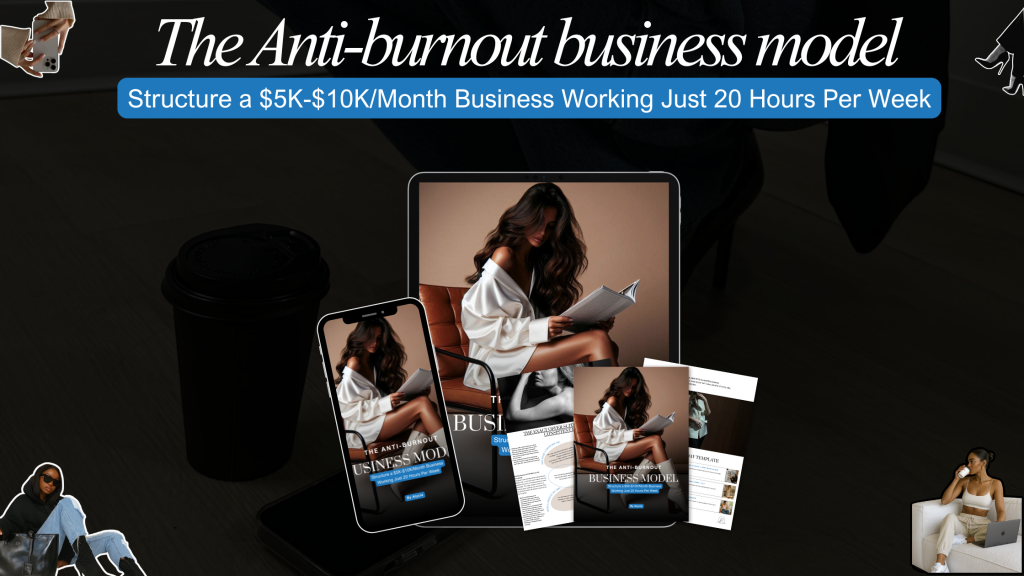
The “Anti-Burnout Business Model” breaks down both strategies, when to use low-ticket vs. high-ticket, how to structure your offers, and exactly how to create content that converts your small audience into paying clients. No more working 12-hour days for $500/month. Get it free here.
The Real Difference Between These Two Strategies
Low-Ticket Strategy:
Requires high volume
Depends on going viral
Attracts candle-sniffers
Tempts you to over-explain in content
Needs massive audience to make good money
Conversion rate: 1-5% of a large list
Time investment: 40+ hours/week creating content
Revenue ceiling: Limited by audience size
High-Ticket Strategy:
Requires fewer people
Depends on activating your existing audience
Attracts serious buyers
Allows you to hold back the “how”
Works with small audience
Conversion rate: 1-5% of a small, engaged list
Time investment: 20-30 hours/week (content + client delivery)
Revenue ceiling: Limited by your capacity and pricing
Both can work. But when you’re starting out with a small audience, trying to make money online with social media without burning out, the high-ticket path gets you to sustainable income faster.
How to Create Content That Converts (When You’re Not Trying to Go Viral)?
The content strategy changes completely when you’re not chasing viral moments.
You’re not trying to appeal to everyone. You’re trying to activate someone.
- Viral content says: “Here’s a tip that might help you!”
- Converting content says: “You’re doing this thing right now. It’s keeping you stuck. This is why. And this is what’s possible instead.”
Jennifer’s content shifted from: “3 ways to attract dream clients” (viral-friendly, broad, safe)
To: “You’re treating your DMs like a sales conversation. But if someone needs three hours of convincing, they were never going to buy. Your real clients? They see your offer and immediately know it’s for them. I’ll show you how to create content that attracts those people instead of time-wasters.” (specific, activating, polarizing)
The second post got fewer likes. But it booked sales calls.
This is the key to how to create content that converts: stop making everyone feel good. Start making your ideal client feel seen.
When you’re selling high-ticket, you don’t need 10K people to think your content is “valuable.” You need ten people to think “this person understands my exact problem and has the solution.”
_Why You Need to Sell Coaching Even If You Want Passive Income?
I know. You want passive income. You want a digital product people buy while you sleep.
That’s the dream. And it’s possible.
But if you’re making $500/month right now with a small audience, and you want to scale to $5K-$10K months, you need to sell coaching first.
Here’s why:
1. Coaching teaches you what to put in your digital products
When you work with clients one-to-one, you see:
What they actually struggle with (vs. what you think they struggle with)
What questions come up repeatedly
What part of your process creates the biggest transformation
What they’re willing to pay for
Then you can create digital products that actually sell. Because you’re not guessing anymore.
2. Coaching proves your method works
Testimonials from coaching clients are worth more than any sales page copy. Real results. Real transformations. Real proof your method works.
This makes selling digital products exponentially easier.
3. Coaching increases your ROI while you’re learning
You’re going to spend time creating content anyway. Might as well be making $2K-$5K per client while you figure out how to create content that converts, instead of making $47 per sale.
Your visibility is growing. Your content skills are developing. During that growth phase, high-ticket keeps you profitable.
4. Coaching clients become your best marketing
A client who paid $2K and got massive results will tell everyone. She’ll tag you. Share your content. Send referrals.
Someone who bought your $27 ebook? Maybe they’ll leave a nice review.
The ROI isn’t just financial. It’s testimonials, referrals, and case studies that make all your future offers easier to sell.
The Strategy Most People Miss Completely
You can do both.
Sell coaching. Sell a low-ticket digital product.
But your content strategy needs to be different for each.
- Low-ticket content: Give value. Show your expertise. Don’t over-explain. Create desire for the complete system.
High-ticket content: Activate. Challenge assumptions. Call out patterns. Show what’s possible. Make them want to work with you directly.
Sarah does this now. She has her $47 product for people who want to DIY it. She has her $997 intensive for people who want custom strategy and support.
Different content speaks to different buyers. Some of her posts end with: “Grab the template inside [product name].”
Other posts end with: “If you want me to customize this to your specific business, DM me ‘STRATEGY’ and we’ll talk.”
She’s making $5K-$8K months now. Working about 25 hours per week. With 2,600 followers.
She didn’t need 10K followers. She needed to understand how to create content that converts for two different buyer types.
What Changes When You Stop Chasing Viral?
Everything gets easier.
You stop spending four hours on a single reel. You stop obsessing over trending audio. You stop analyzing why your post only got 200 views instead of 2K.
You start asking different questions:
Did this activate my ideal client?
Did this show them I understand their problem?
Did this create desire for my solution?
Did this move someone closer to buying?
Jennifer posts three times a week now. Down from 12 times per week when she was chasing virality.
Her engagement is lower. Her sales are 6x higher.
She’s not in her DMs for three hours a day. She’s not refreshing her analytics every 20 minutes. She’s not comparing herself to coaches with 50K followers.
She’s working 20-25 hours per week. Making €3K-€5K months. Taking Fridays completely off.
This is what happens when you stop trying to make money online with social media through volume and start focusing on ROI.
The Uncomfortable Truth About Small Audiences
You don’t have a “too small” problem. You have a “wrong strategy” problem.
The entrepreneurs making $10K months with 1,500 followers exist. They’re not myths. They’re people who understood this:
When you have a small audience, you can’t afford to waste time on people who will never buy.
Every piece of content needs to work harder. Every DM conversation needs to qualify, not convince.
If you’re trying to go viral and attract everyone, you’ll attract mostly people who want free stuff.
If you’re creating content that activates your ideal client and repels everyone else, you’ll attract fewer people. But the people you attract will actually buy.
Sarah used to worry about unfollows. Now she celebrates them. “If my content made you unfollow, you were never going to be a client anyway. You were taking up space in my feed.”
Brutal? Maybe. But also true.
The candle-sniffers leaving makes room for the buyers to find you.

What This Actually Looks Like In Practice?
You’re probably wondering: “Okay, but what do I actually do differently?”
If you’re currently selling low-ticket and stuck at $500/month:
Add a coaching offer. Even just a one-hour intensive. Price it at $297-$497.
Change your content. Stop giving away the entire framework. Give the first step. Show what’s possible. Create desire for the complete solution.
End some posts with: “Want the complete system? Get [product name].”
End other posts with: “Want me to customize this to your business? DM me [WORD].”
Different content for different buyers.
If you’re currently not selling anything and just creating content:
Pick one. Coaching or digital product. Start with coaching if you want to make money faster and learn faster.
Create content that activates your ideal client. Tell micro-stories. Name the pattern they’re stuck in. Show what’s possible.
Stop trying to go viral. Start trying to book sales calls.
If you’re currently selling coaching but not getting clients:
Your content is probably too broad. You’re trying to appeal to everyone.
Get specific. Talk to one person. The person who has the exact problem you solve.
Create content that makes her think: “Is this person living in my head? How do they know exactly what I’m going through?”
That’s how to create content that converts.
The question is: are you going to keep chasing the wrong strategy because everyone else is doing it?
Or are you going to build a business that actually pays you what you’re worth?
Your move.
If you are ready to get serious on how to create content that convert, you need to dowload my “Anti-Burnout Business Model” shows you exactly how to structure your offers for maximum ROI, what to charge, and how to create content that converts your small audience into paying clients, without working 12-hour days, without sacrificing your sanity.
Did you enjoy this blog post? Here are some other blog posts you may enjoy: